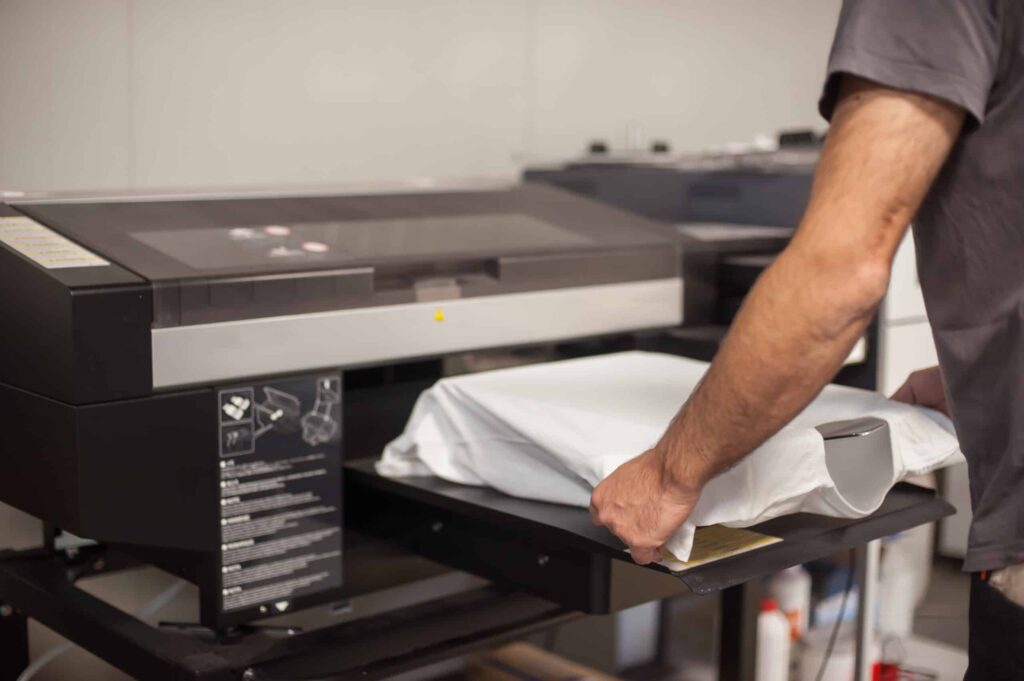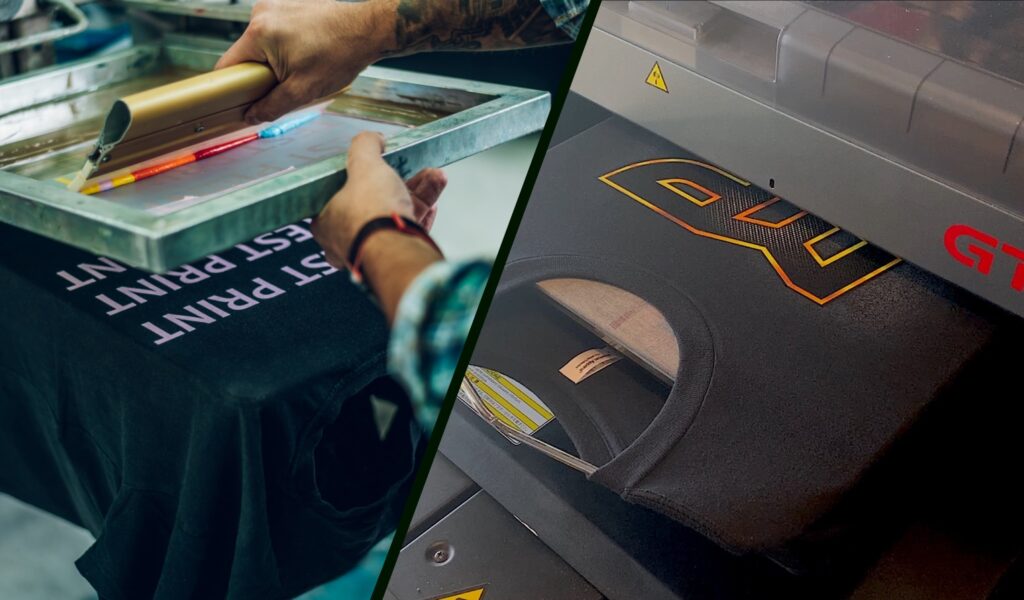
Direct-to-film (DTF) printing: what it is and what it can print on
DTF prints your design onto film, then heat-presses it onto almost any fabric. How it works, where it shines, and what to expect from the feel and the wash.
The short answer
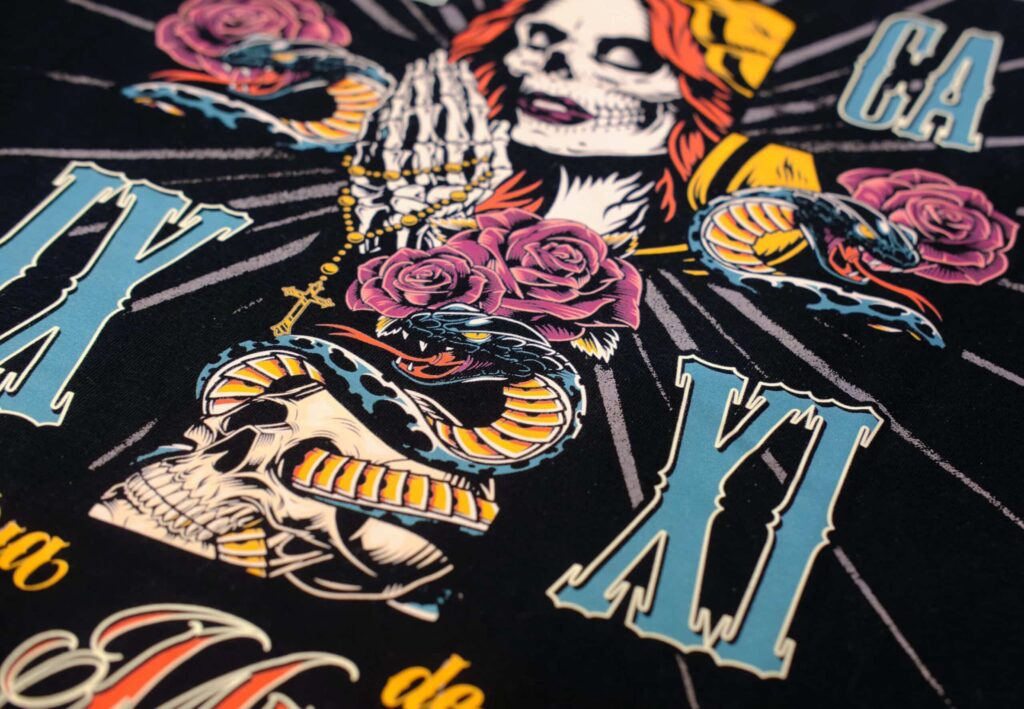
Direct-to-film (DTF) printing prints your design onto a special film, coats it with an adhesive powder, then heat-presses it onto the garment. Because the adhesive does the bonding, DTF works on cotton, polyester, blends and many other fabrics, and keeps fine detail and full colour bright on light or dark items. The print sits on the surface, so large solid areas feel slightly firmer than DTG.
On this page +
Direct-to-film, usually shortened to DTF, is one of the newer ways to decorate apparel, and one of the most flexible. If you have ever needed a detailed, full-colour logo on a polyester shirt, a hoodie and a tote bag in the same order, DTF is probably the method that makes it simple.
How does DTF printing work?
- Print. The design is printed in reverse onto a clear PET film — the colours first, then a layer of white behind them.
- Powder. While the ink is still wet, it is coated with a fine hot-melt adhesive powder. The excess is shaken off, so powder only stays where there is ink.
- Cure. The film is heated until the powder melts into a smooth adhesive layer. At this point it is a finished transfer.
- Press. The transfer is placed on the garment and heat-pressed, which bonds the adhesive to the fabric.
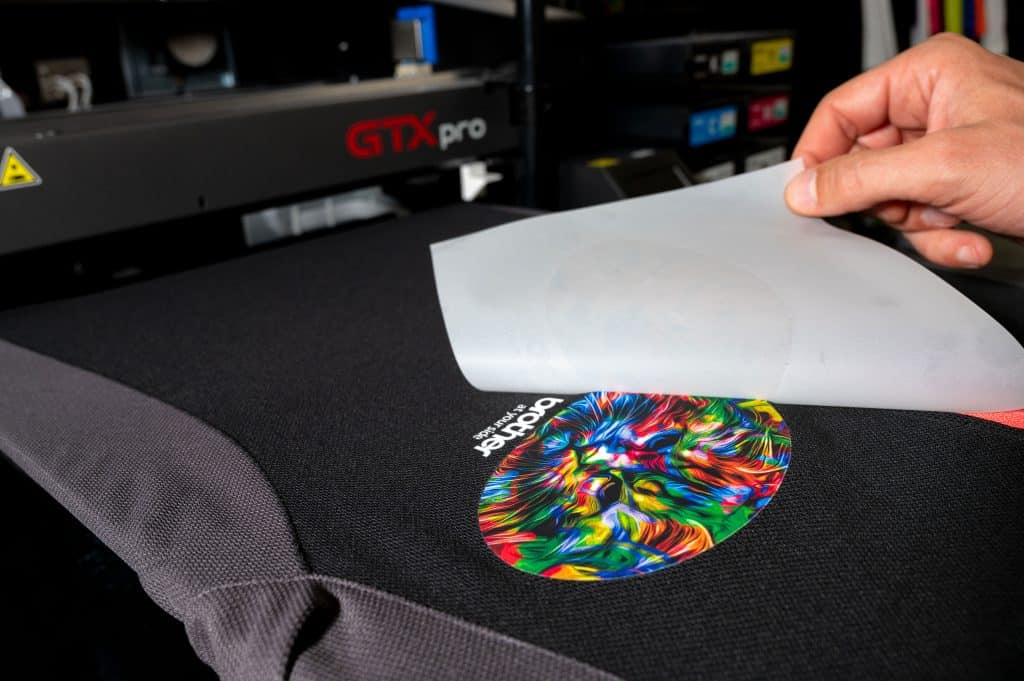
- Peel. The film is peeled away, leaving the print on the garment.
What can DTF print on?
Because the adhesive does the bonding, DTF is not fussy about fibre. It works on:
- 100% cotton and cotton blends
- polyester and performance fabrics
- fleece hoodies and sweatshirts
- canvas tote bags and many bags
- nylon and other synthetics, with care over the pressing temperature
The limit is heat. Anything that cannot take a heat press — some coated rainwear, very heat-sensitive synthetics — is not a good candidate, and an unfamiliar garment is worth testing first. Hard goods such as mugs use different processes, usually sublimation.
How does a DTF print feel, and how long does it last?
A DTF print is a thin, flexible layer on the surface of the fabric. It stretches with the garment, and on a small logo you barely notice it. On a large solid area it feels like a smooth film — slightly firmer than a DTG print, and softer than most old-style heat transfers.
Pressed at the right temperature, time and pressure, DTF holds up well to regular washing without cracking. To make it last, wash the garment inside out in cold water, dry it on low heat, and never iron directly on the print.
When should you choose DTF?
- Polyester and performance wear. DTF bonds where DTG ink does not.
- Small, detailed logos. Left-chest, sleeve and neck prints stay crisp, including fine lines that embroidery would lose.
- Bright colour on dark garments. The white layer keeps colours vivid on black.
- Orders that mix garment types. The same transfer can go on a tee, a hoodie and a bag.
DTF vs DTG: which should you pick?
Both print full colour with no screens. The difference is where the ink ends up. DTG puts ink into cotton fibres, so it feels softer on big prints but needs cotton. DTF puts the print on the surface with an adhesive, so it works on almost any fabric and keeps small details sharp, at the cost of a little more feel on large solid areas. For a big front print on a cotton tee, DTG often wins. For a performance shirt or a small logo, DTF usually does. What T-shirt printing methods are there? compares both with the other four methods.
Does Design by NH do DTF printing?
Yes. DTF is one of the two print methods Design by NH uses, with DTG, for customers in Owen Sound and Grey-Bruce. Send the design, the garments and a rough quantity, and we will tell you whether DTF or DTG suits it better. Start on the T-shirt printing page.
Questions people ask
Quick answers
Is DTF printing durable? +
Yes, when it is pressed at the right temperature, time and pressure. A well-applied DTF print stays flexible and resists cracking through regular washing. Wash it inside out in cold water and do not iron directly on the print.
Is DTF better than DTG? +
Neither is better everywhere. DTF handles more fabrics, including polyester, and keeps very small details crisp. DTG feels softer on large prints on cotton. The garment usually decides it.
Can DTF print bright colours on dark shirts? +
Yes. Every DTF print has a layer of white ink behind the colours, so bright colours stay bright on black and other dark garments.
Can DTF be used on hats? +
It can, on a suitable cap and with a press made for curved surfaces. Embroidery is still the more traditional finish for hats, and the one most people expect on a structured cap.