10 reasons to choose direct-to-garment printing (and 3 reasons not to)
DTG is the go-to for detailed, full-colour artwork on cotton in small quantities. Ten reasons it earns that place, and three cases where it does not.
The short answer
Direct-to-garment (DTG) printing is worth choosing when you need detailed or full-colour artwork on cotton garments in small or varied quantities. It needs no screens, prints photographs and gradients, feels soft, and makes one-offs and personalized shirts practical. It is a weaker choice for polyester, very large runs of a simple design, and neon or metallic colours.
On this page +
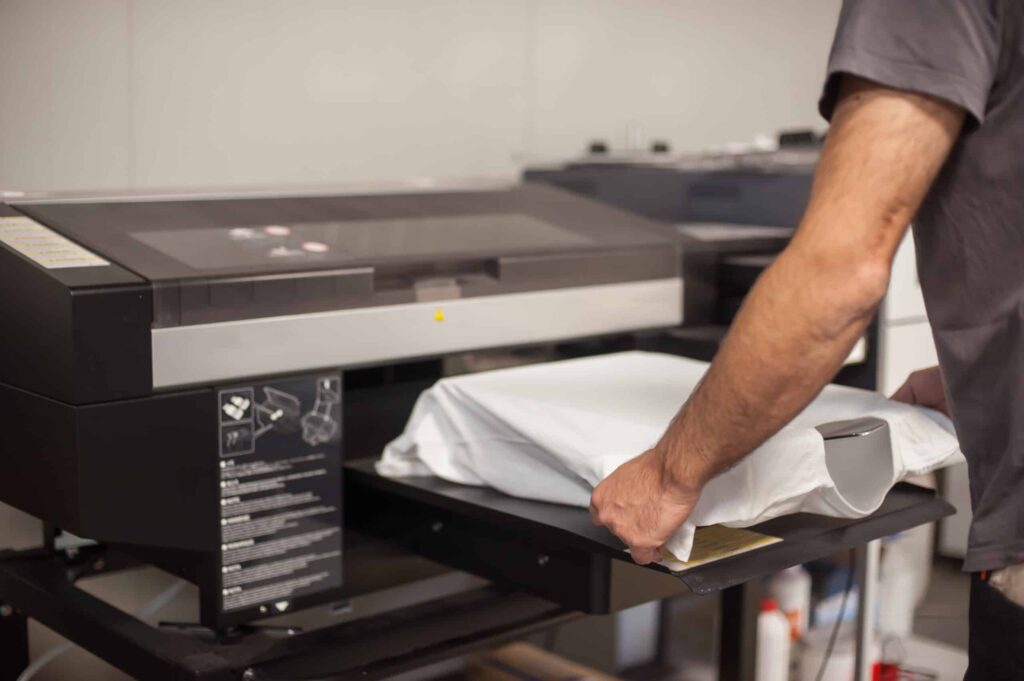
Direct-to-garment printing changed what is practical for small orders. Before it, a full-colour design on ten shirts meant paying to set up a screen for every colour. With DTG, the printer lays the whole design straight into the fabric in one pass. Here is why that matters, and where its limits are.
Why choose DTG printing?
1. There is no setup for each colour
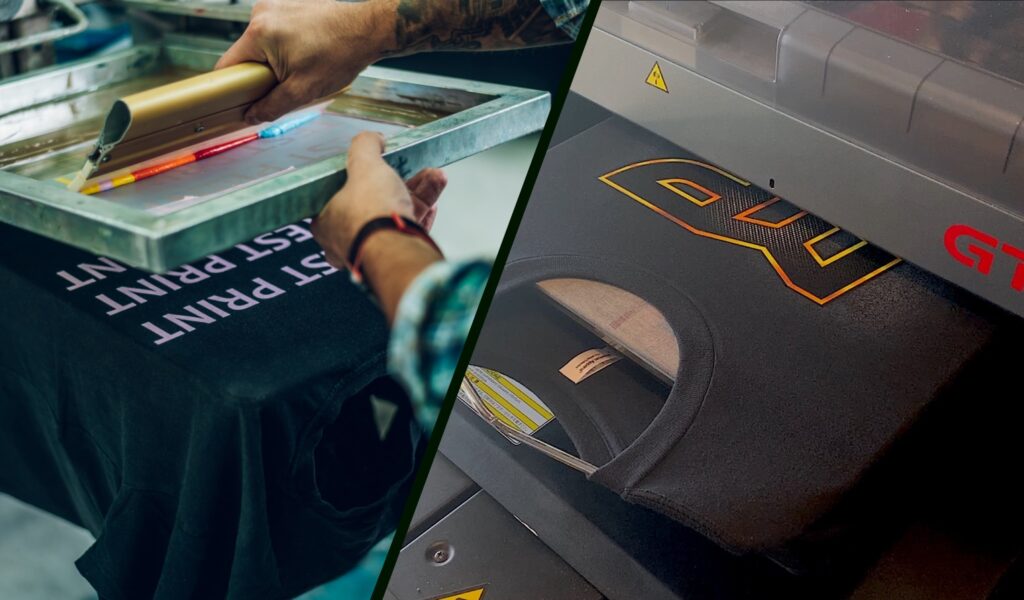
Screen printing needs a screen made and lined up for every colour before the first shirt prints. DTG needs a print-ready file. That is the root of most of the reasons below.
2. Photographs and gradients print as they are
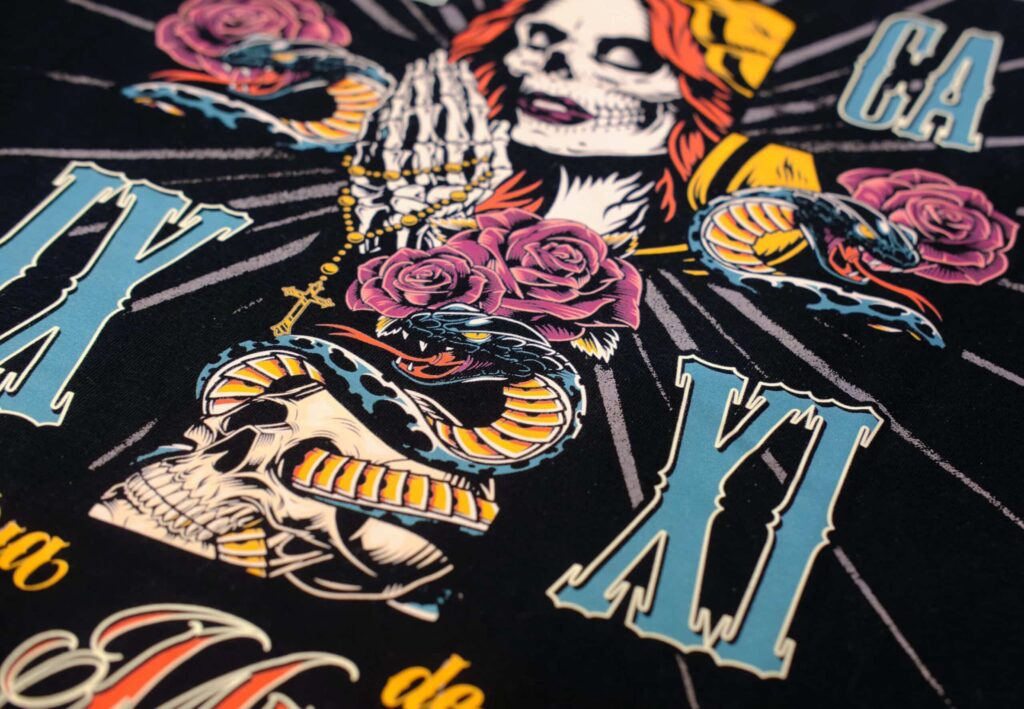
Soft shadows, skin tones, colour fades and fine texture all print without being broken into separate colours. If your artwork looks like a photograph, DTG is usually the tool for it.
3. Colour does not cost extra
A design with two colours and a design with two hundred take the same single pass. You never have to simplify the artwork to keep the price down.
4. Small runs make sense
Because there is no setup to spread across the order, a short run is not penalized the way it is with screen printing. It is a practical way to test a design before committing to a larger order.
5. Every shirt can be different
Names, dates, numbers or entirely different designs can change from one shirt to the next with no extra setup. That makes DTG a natural fit for personalized gifts, events and staff shirts with individual names.
6. It feels soft on the shirt
On light garments the ink sits in the fibres rather than on top of them, so the print is barely there to the touch. On dark garments a white underbase adds a little more feel, but it stays flexible.
7. Fine detail survives
Thin lines, small type and intricate illustration hold up well, because the printer places ink precisely rather than pushing it through a mesh.
8. There is less to prepare before printing starts
With no screens to burn and no colours to separate, the work before printing is mostly getting the artwork right. Once the proof is approved, printing can begin.
9. It uses water-based inks
DTG inks are water-based pigment inks, and the process produces very little waste per shirt — no screens to make and clean for each design.
10. Reprinting is simple
The setup for a DTG print is the file itself. Reordering the same design later starts from the same artwork, with nothing physical to remake.

When is DTG the wrong choice?
Polyester and performance fabrics
DTG inks are designed to bond with cotton. On polyester, the print can look dull and wear poorly. For performance shirts, direct-to-film or sublimation is the better route — see our guide to DTF printing.
Large runs of a simple design
Once you are printing a lot of the same one- or two-colour logo, screen printing’s setup cost is spread thinly enough that it usually wins on price per shirt. DTG vs screen printing walks through the trade-off.
Neon, metallic and specialty effects
DTG prints with a standard set of process colours plus white. Fluorescent colours, metallics, glow-in-the-dark and raised effects need screen-printing inks, foils or a different decoration altogether.
How do you get the best DTG result?
- Choose the right shirt. 100% cotton, or a blend that is mostly cotton, gives the brightest print.
- Send artwork at full print size. A PNG with a transparent background at 300 dpi, sized to the final print, avoids blurry edges.
- Avoid faint, semi-transparent edges on dark shirts. Soft glows and drop shadows can print with a pale halo because of the white underbase. Solid edges print cleanly.
- Look after it. Wash inside out in cold water, skip the bleach, dry on low heat or hang to dry, and never iron directly on the print.
Where does Design by NH come in?
Design by NH prints with DTG and DTF for people, teams and businesses in Owen Sound and Grey-Bruce. If DTG is right for your design, we will say so; if DTF or another method would serve it better, we will say that instead. Start on the T-shirt printing page, or see how all six methods compare in What T-shirt printing methods are there?
Questions people ask
Quick answers
How long does a DTG print last? +
A DTG print that was pretreated and cured properly lasts through many washes. Washing inside out in cold water, skipping bleach, and drying on low heat or hanging to dry all extend it. Like any print, the colour softens a little over time.
What fabric is best for DTG printing? +
100% cotton gives the brightest, longest-lasting DTG print. High-cotton blends work well. Garments with a lot of polyester do not, because DTG inks are made to bond with cotton fibres.
Why does DTG artwork need a transparent background? +
Anything in the file that is not transparent gets printed, including a white or coloured box around the design. A PNG with a transparent background prints only the artwork.